
Home › Saving Money › 10 Silent Money Leaks
10 Silent Money Leaks Draining Your Wallet Every Month

Let me ask you something uncomfortable: do you actually know where all your money goes each month? Not roughly — actually. Because here's what I've learned after years of writing about personal finance: most of us are slowly leaking money through cracks we never think to check. Not big dramatic purchases. Tiny, quiet drips. A subscription here. A fee there. A habit that costs $4 a day and somehow adds up to nearly $1,500 a year.
I call them silent money leaks — and I bet you're springing at least three of them right now. The good news? Every single one on this list has a fix that takes less than 30 minutes. Let's find your leaks and plug them.
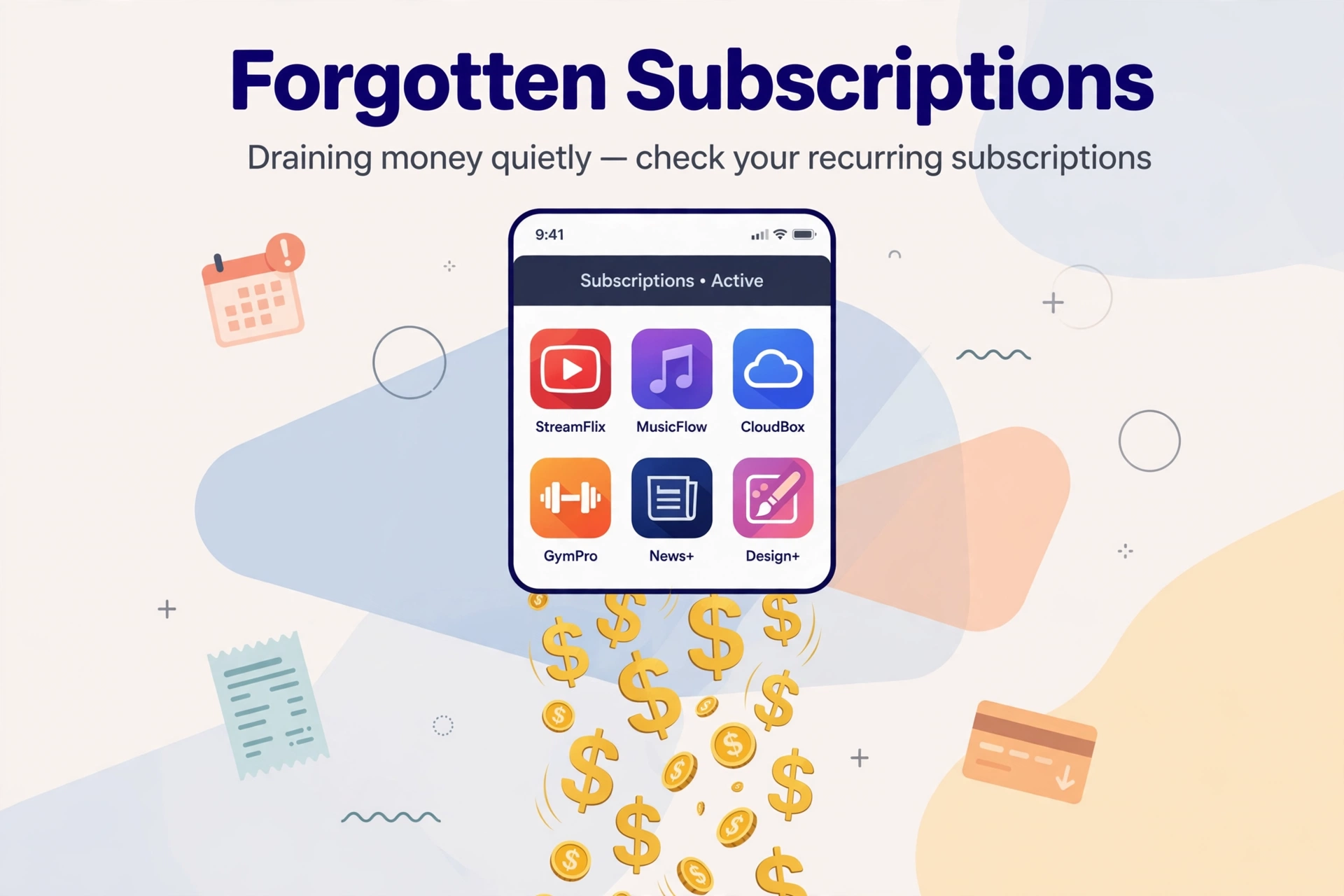
1. Forgotten Subscriptions (Average victim: $273/month)
This is the big one. Studies keep finding the same thing: the average American thinks they spend about $86 a month on subscriptions but actually spends closer to $273. That gap? It's the streaming service you forgot about, the app trial that quietly converted to paid, the gym membership from January.
The fix: Pull up your last two bank and credit card statements. Highlight every recurring charge. For each one, ask: did I use this in the last 30 days? If the answer is no, cancel it right now — not later, now. Most services let you cancel in two minutes from your account settings. Set a calendar reminder to do this audit every six months.
2. The Daily Coffee Run ($1,200–$1,800/year)
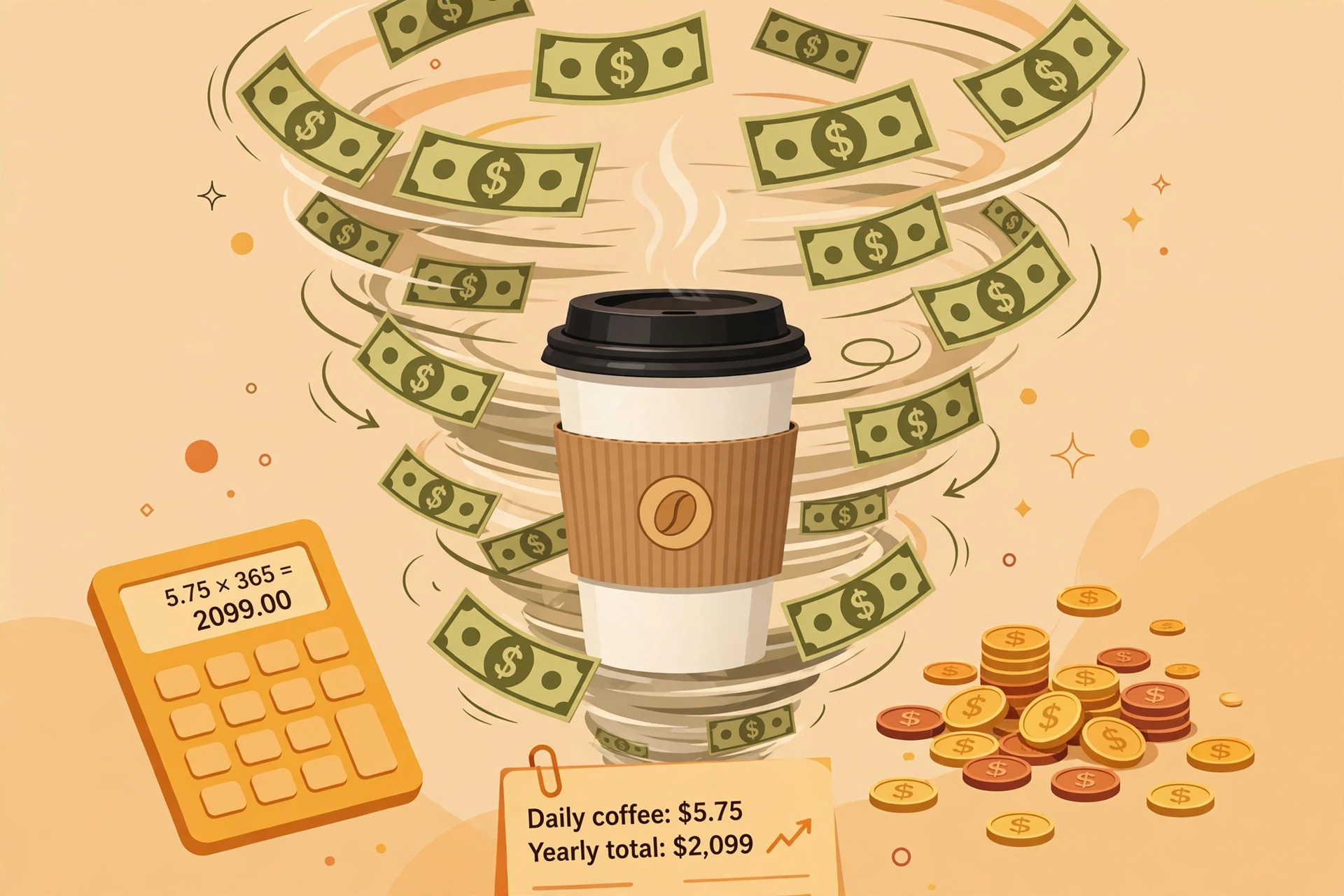
I'm not going to lecture you about lattes — I like good coffee too. But let's do honest math: $5.50 a day, five days a week, 50 weeks a year is $1,375. That's a vacation. That's an emergency fund starter. That's real money vanishing one paper cup at a time.
The fix: You don't have to quit. Just cut it in half. Brew at home three days a week (a decent setup pays for itself in a month), buy out twice. You'll save $700+ a year and honestly? You'll enjoy the café days more.
3. Bank Fees You're Paying for Nothing
Monthly maintenance fees ($5–$15), out-of-network ATM fees ($3–$5 a pop), overdraft fees (a brutal $35 average). Banks collected billions in these last year, and most of them are completely avoidable.
The fix: Switch to a no-fee online bank or credit union — it takes 20 minutes and most have better apps than the big banks anyway. Turn on low-balance alerts so you never overdraft. And use your own bank's ATMs or get cash back at the grocery store.
4. Food Delivery Markups (30–50% more than pickup)
That $14 burger becomes $22 by the time you add the delivery fee, service fee, and tip. Do that twice a week and you're spending an extra $800+ a year just for the privilege of not driving ten minutes.
The fix: When you want takeout, choose pickup — most apps show you the price difference and it's shocking. Or batch it: one delivery night a week instead of three. Your wallet will feel it immediately.
5. Paying Full Price for Insurance Every Year
Car and home insurance companies count on one thing: your loyalty. They slowly raise your premium every renewal, betting you won't shop around. The difference between your current rate and the best available one is often $300–$600 a year.
The fix: Once a year, spend 30 minutes getting quotes from three competitors. It feels like homework, but it's the highest-paid half hour of your year. I've never met anyone who did this and didn't save money.
6. The "Free Trial" That Wasn't Free
You signed up for a 7-day trial in March. It's October. You've been charged $12.99 every month since. This isn't an accident — companies design trials to convert silently because they know most people won't notice for months.
The fix: The moment you start any trial, set a phone reminder for two days before it ends. Decide then — keep or cancel. Future you will be grateful.
7. Energy Vampires in Your Home
Devices on standby — TVs, game consoles, chargers, that old cable box — quietly sip electricity 24/7. The average household wastes $100–$200 a year powering things that aren't even on.
The fix: Plug your entertainment setup into a power strip and flip it off at night. Unplug chargers when they're not charging. It takes ten seconds and the savings are automatic.
8. Buying Brand Names on Autopilot
Store-brand groceries are often made in the same factories as the name brands — sometimes literally the same product in different packaging. The markup for that familiar logo? Often 20–40%.
The fix: Try the store brand once for your staples — milk, eggs, pasta, canned goods, cleaning supplies. If you can't taste the difference (you usually can't), you've just cut your grocery bill by hundreds a year.
9. Ignoring Your Credit Card Rewards
This one's a leak in reverse — money you're not collecting. If you're spending $2,000 a month on a 2% cash-back card, that's $480 a year you're leaving on the table by using debit or a no-rewards card.
The fix: Put all regular spending on a no-annual-fee cash-back card and pay it off in full every month. Set up autopay for the full balance so you never pay interest. Free money, zero effort.
10. The "I'll Deal With It Later" Tax
Late fees. Higher interest from not refinancing. The parking ticket that doubled because you forgot about it. Procrastination has a price tag, and it compounds: a single $35 late fee on a credit card can also trigger penalty APRs that cost you hundreds more.
The fix: Automate everything you can — bills, savings, minimum payments. What's automated can't be forgotten. For the rest, a simple weekly 10-minute "money check-in" catches problems while they're still small.
The average household that plugs just half of these leaks saves $2,000–$4,000 a year. That's not budgeting magic — it's just paying attention.
Your 30-Minute Leak-Plugging Checklist
Don't try to fix everything today. Start here:
- Minutes 0–10: Scan two months of statements, cancel every subscription you haven't used in 30 days.
- Minutes 10–20: Set up autopay for all bills and a low-balance alert on your checking account.
- Minutes 20–30: Pick ONE daily habit (coffee, delivery, snacks) and cut it in half starting tomorrow.
That's it. Thirty minutes, and you've probably just given yourself a raise. Come back next month and tackle the next three. Small leaks, plugged steadily, become serious money — and serious money becomes options. That's what this is all really about.
Want to see exactly where your money's going? Try our free budget planner — it takes ten minutes and shows you your leaks in black and white.
Frequently Asked Questions
How much money do people waste on unused subscriptions?
Studies consistently find Americans underestimate their subscription spending by roughly $190 a month — thinking they spend ~$86 while actually spending ~$273. The gap comes from forgotten trials, unused streaming services, and app subscriptions that auto-renewed silently.
What's the fastest way to find money leaks?
Pull two months of bank and credit card statements and highlight every recurring charge. Cancel anything unused in 30 days. Then set up autopay and low-balance alerts to prevent fee-based leaks going forward. The whole audit takes about 30 minutes.
Do small daily expenses really matter?
Yes — because of frequency. $5.50 a day on coffee is $1,375 a year. $22 twice a week on delivery instead of $14 pickup is $800+ a year in markups. Small amounts times 365 days equals life-changing money over a decade, especially if invested.
How often should I audit my subscriptions?
Every six months at minimum. Set a recurring calendar reminder. Companies add new services constantly and trials convert silently, so a twice-yearly 15-minute check keeps the leaks from reopening.