Home › Saving Money › Baby Formula Costs
How to Save Money on Baby Formula Costs Every Month (9 Real Ways)
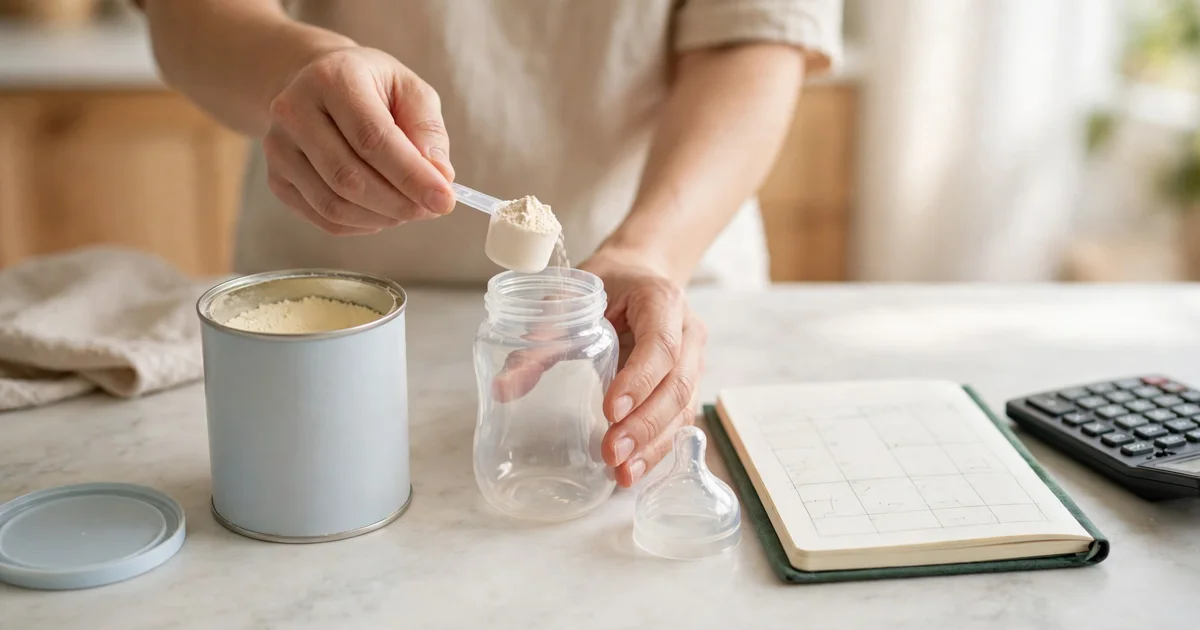
Learning how to save money on baby formula costs every month starts with one uncomfortable truth: formula is not a small line in the budget. It is a bill that arrives every single week, for about a year, and it is easy to overpay for it without ever noticing. Reported ranges run about $150 to $300 a month, depending on your baby's age, daily intake, and the type of formula you buy — which means the difference between a smart formula routine and a careless one can be well over $1,000 across the first year. The good news is that almost all of that gap comes from choices you can change this week: which form you buy, where you buy it, and how you pay for it. None of the nine moves below asks you to water down formula, skip feeds, or switch to something your baby cannot tolerate. They are about paying the lowest honest price for the formula your baby already drinks.
First, Find Your Real Baby Formula Cost Per Month
Before you try to save money on infant formula, you need your own number — not a national average. Two families can buy the same brand and pay wildly different amounts, because one buys ready-to-feed bottles at a corner store and the other buys powder in bulk. The fix is a three-minute calculation: cost per ounce.
Here is the worked example we will use through this guide. Suppose your baby drinks about 30 ounces a day, and your prepared formula works out to $0.25 an ounce:
- Daily cost: 30 ounces × $0.25 = $7.50 a day
- Monthly cost: $7.50 × 30 days = $225 a month
- Yearly cost: $225 × 12 = $2,700 a year
That $225 is our baseline. Every saving in this guide will be measured against it, so you can see what each move is actually worth. To get your own figure, take the price of one container, divide it by the number of prepared ounces it makes (the label tells you), and multiply by the ounces your baby drinks in a day, then by 30. Write the result down. If you do not know your cost per ounce, every "deal" you see is just a guess — and formula brands know it.
One more thing to track: waste. A bottle your baby does not finish is money poured down the sink, and it happens most often when bottles are mixed too large. Mixing smaller bottles more often, and only what your baby usually drinks, can quietly cut a few dollars a week. It is not the biggest lever on this list, but it is free, and it starts tonight.
1. Switch to Powder: The Powdered Formula vs Ready to Feed Cost Gap
The single biggest price gap in formula is the form it comes in. Powdered formula is almost always the cheapest per ounce, liquid concentrate sits in the middle, and ready-to-feed bottles are the most expensive — you are paying for water, packaging, and convenience in every bottle. If your baseline is $225 a month on powder, the same baby on ready-to-feed could easily cost far more for the identical nutrition.
That does not mean ready-to-feed has no place. It is genuinely useful for travel, for night feeds when you are half asleep, and for the first days while you are still learning the routine. The money mistake is using it as the everyday default. A practical compromise many families land on: powder at home, and a small stash of ready-to-feed bottles for the car, the diaper bag, and emergencies. You keep the convenience where it actually helps, and you stop paying a premium on the 90% of feeds that happen at your own kitchen counter.
One safety note that matters more than any saving: always mix formula exactly as the label says. Never add extra water to stretch a can, and never make homemade formula. Both can harm your baby, and neither is worth any amount of money. If cost is genuinely forcing hard choices, the assistance routes in steps 8 and 9 exist for exactly that situation — use them instead.
2. Try a Store Brand: Generic Baby Formula vs Brand Name
The generic baby formula vs brand name question has a reassuring answer: all infant formula sold in the United States must meet the same federal nutritional requirements. That means a store brand is held to the same standards as the famous tin with the advertising budget. The U.S. Food and Drug Administration regulates infant formula, and the recipe differences between brands are usually small — which is why pediatricians often say the best formula is the one your baby tolerates well, whatever the label says.
Run the example. Suppose the name brand costs $0.30 an ounce and a store brand your baby does fine on costs $0.22 an ounce, at 30 ounces a day:
- Name brand: 30 × $0.30 × 30 = $270 a month
- Store brand: 30 × $0.22 × 30 = $198 a month
- Saving: $72 a month, or $864 over a year
That is the largest single saving on this list, and it requires no coupons, no driving, and no subscription. The sensible way to test it: buy one small container first, not a bulk box. Give your baby a few days on it, watch for fussiness, spit-up, or changes in stools, and check with your pediatrician if anything worries you — especially if your baby has allergies, reflux, or a medical condition that calls for a specific formula. If the store brand works, you have just found $72 a month. If it does not, you spent a few dollars finding out, and you move on to the next lever.
3. Buy Baby Formula in Bulk — But Only What You Will Use
Learning to buy baby formula in bulk is really learning to compare per-ounce prices, because a bigger box is not automatically cheaper. Warehouse clubs and big multi-packs often win, but sometimes a grocery store sale beats them. The rule is simple: never compare can prices, only cost per prepared ounce, and always check the expiration date before you stock up.
Bulk buying has two traps. The first is expiry: an opened can of powder should generally be used within about a month, and unopened cans still expire, so a six-month stockpile that goes stale is not a saving at all. The second is your baby outgrowing a stage: babies move from one formula stage or type to another, and a bulk box of a formula your baby no longer needs is an expensive shelf ornament. A safe bulk rule is to keep no more than about a month's supply on hand, and to buy the next batch when you open the last can — not when the pantry looks empty.
Where to look for bulk value: warehouse clubs if you already belong to one, big-box multi-packs during sales, and your regular grocery store's own bulk shelf. Do not pay a warehouse membership fee just for formula unless the per-ounce saving covers the fee several times over. And stack the saving: a bulk price plus a coupon plus a rewards discount is how a good price becomes a great one.
4. Use a Baby Formula Subscription Discount
A baby formula subscription discount is one of the easiest savings to set up, because it runs itself. Many brands and retailers knock a percentage off every order when you subscribe, and some add free shipping. Take our $225-a-month baseline: a subscription that saves 10% is $22.50 a month, or $270 over a year, for about five minutes of setup.
The catch is the same as with any subscription: it only saves money if the deliveries match what you actually use. Set the delivery interval to your real consumption — if a can lasts you 10 days, a monthly box of two cans is about right, not four. Check the subscription price every couple of months, because brands change prices and a subscription can quietly stop being the cheapest option. And remember the rule from step 3: never let subscriptions stack up into a stockpile. Pause or skip a delivery the moment you have more than a month's supply.
Subscriptions pair well with the rest of this list. A store brand on subscription, bought at a bulk price, with a coupon applied, is how families turn a $225 monthly bill into something closer to $170–$190 — without changing what is in the bottle. If you already run a subscription audit on your streaming and apps, add formula to the same review: it is the subscription most worth keeping, and the one most worth repricing.
5. Stack Baby Formula Coupons and Rewards
Baby formula coupons and rewards are scattered in more places than most parents expect, and individually they look small — but formula is a weekly purchase, so small discounts compound fast. Here is where to look:
- Brand websites and rewards programs. Sign up with your formula's brand directly. Many send coupons, sample offers, and "checks" toward future purchases just for joining.
- Your pediatrician's office. Ask at every visit. Offices regularly receive samples and coupons, and they would rather hand them to a family that asks than leave them in a drawer.
- Grocery and drugstore apps. Clip the formula coupon in your store's app before you shop, and let loyalty points accumulate on a purchase you were making anyway.
- Baby registries. If you are expecting, add formula to your registry. Friends and family would often rather buy something useful than guess at gifts — and our guide to hosting a baby shower at home on a budget shows how those early gifts can stretch a long way.
- Cashback on the card you already use. Paying with a card that earns rewards on groceries turns a $225 monthly bill into a few dollars back every month, as long as you pay the card in full. Never carry a balance to chase cashback — interest wipes it out many times over.
A word of caution on secondhand deals: never buy formula from a stranger online, never accept opened cans, and check every can for dents, damage, or a missing safety seal. A suspiciously cheap can that has been stored badly or tampered with is not a bargain. Coupons from the brand and the store are free and safe; a random marketplace tin is not worth the risk.
6. Make Formula a Line in Your Budget, Not a Surprise
Formula hurts most when it is unplanned. A can runs out on a Sunday, someone makes an emergency trip to the most expensive nearby store, and the month's grocery budget takes a hit it never saw coming. The fix is boring and effective: give formula its own budget line, funded every payday, like rent or electricity.
Use your own monthly figure from the first section — in our example, $225 — and treat it as fixed, not flexible. When the price drops because of a subscription or a store-brand switch, move the difference straight into savings rather than letting it dissolve into the grocery bill. That is how a formula saving becomes an emergency fund contribution instead of a slightly nicer shopping trip. Our free budget planner can hold the line for you, and our guide to saving money on groceries helps with the rest of the food bill, so formula does not have to compete with dinner for the same dollars.
It also helps to separate "baby costs" from "household costs" in your head for a few months. Diapers, wipes, clothes, and formula together are a real budget category, and families who track it usually find one item — often formula — doing most of the damage. Once you can see that, the fixes in this guide have an obvious place to land. Our guide to saving money on kids clothes covers the next-biggest baby line, and saving money fast on a low income covers the wider squeeze when the whole budget is tight.
7. Cut Waste: Mix Less, Store It Right, and Track Appetite
Waste is the quietest formula cost, because it never appears on a receipt. A bottle mixed too big, a can left open too long, a ready-to-feed bottle opened for one feed and forgotten — each one is a few dollars, and a few dollars a week is $150 or more a year.
- Mix to appetite, not to the bottle size. If your baby usually drinks 4 ounces, mix 4 ounces, not 6 "just in case." Top up with a fresh small bottle if they are still hungry.
- Follow the label on storage. Prepared formula should not sit out, and opened powder has a limited life once opened. When in doubt, follow the tin and your pediatrician, not a forum post.
- Keep one open can at a time. Two open cans means two expiry clocks running, and the second one often loses.
- Track intake for a week. A simple note — ounces per feed, feeds per day — tells you your true daily total, which is the number every saving in this guide depends on. Babies' appetites change as they grow, so redo the note every month or two.
This step also protects you from overbuying. The family that knows their baby drinks 28 ounces a day will not panic-buy four cans during a sale, and will not subscribe to a delivery that is twice what they need. Knowledge is the cheapest formula saving there is.
8. Check WIC Formula Benefits — Even If You Think You Won't Qualify
WIC formula benefits are the most overlooked saving on this list, because many working families assume they earn too much to qualify and never check. WIC — the Special Supplemental Nutrition Program for Women, Infants, and Children — can provide infant formula to eligible families, and eligibility depends on income limits and state rules that are more generous than many people expect.
Checking costs nothing and takes a few minutes: the U.S. Department of Agriculture, which runs WIC, points families to their state agency to apply, and many states let you start the screening online or by phone. If you qualify, WIC can cover a large share of the formula bill — potentially the whole of it — which dwarfs every coupon and subscription on this list combined. If you do not qualify, you have lost ten minutes and you move on with a clear conscience.
Two related checks while you are at it: ask your pediatrician's office about any local formula banks or community programs, and check whether your health plan covers a specific formula your baby needs for medical reasons — some plans do, even though most do not cover standard formula. These are not guaranteed wins, but they are free questions, and one "yes" can be worth hundreds of dollars.
9. Put the Saving Somewhere You Can See It
The last step is the one that makes the other eight stick. Add up what you have saved — say the store brand saves $72 a month and the subscription saves $22.50 — and move that $94.50 somewhere visible the day you save it, not at the end of the month when it has already vanished into groceries. A separate savings pocket, a labeled envelope, or a transfer to your emergency fund all work. What does not work is leaving the money in checking and hoping it survives.
Over a year, $94.50 a month is $1,134. That is a car repair, a month of rent help, or the start of a college fund — and it came from a bill you were paying anyway, without your baby drinking a single ounce less. Formula is temporary: most babies move on from it within about a year. The habit of finding the lowest honest price, checking assistance you might qualify for, and banking the difference is not temporary at all. It is the same habit that will save you money on groceries, bills, and everything else that follows.
Start with three moves this week: work out your cost per ounce, price a store brand, and check WIC. Those three alone are where most of the money is. Then add a subscription and a coupon routine, and let the rest of the list follow. Your baby will not notice any of it — and your budget absolutely will.

We're a small team of personal-finance writers who test every strategy on our own budgets first. Our guides are researched from primary sources like the CFPB, the Federal Reserve and the IRS — and updated when the numbers change. No hype, no get-rich-quick promises: just practical money help that works on a real paycheck.
Frequently Asked Questions
How much does baby formula cost per month?
Reported ranges run about $150 to $300 a month, depending on your baby's age, how much they drink each day, and whether you buy powder, concentrate, or ready-to-feed formula. Work out your own cost per ounce and multiply by what your baby actually drinks for your real number.
Is generic baby formula as good as brand name?
All infant formula sold in the United States must meet the same federal nutritional requirements, so store brands are held to the same standards as name brands. If your baby tolerates a store brand well, it can save a large amount every month. Ask your pediatrician before switching if your baby has allergies or a medical condition.
What is the cheapest way to buy baby formula?
For most families, powdered formula bought in bulk or on subscription, at the lowest cost per ounce, is the cheapest route — provided you will use it before it expires. Powdered formula is usually far cheaper per ounce than ready-to-feed bottles.
Can WIC help pay for baby formula?
Yes — WIC, the federal nutrition program for women, infants, and children, can cover infant formula for families who qualify. Eligibility depends on income and state rules, so it is worth checking even if you assume you earn too much.